
The Social and Commercial Currency of the Argentine Mate Circle
Mate is far more than an herbal infusion in Argentina. It is a portable social institution, a daily workplace companion, and an informal setting in which relationships are tested and strengthened. The gourd can appear in a family kitchen, a university study group, a construction site, a co-working hub, or a senior executive”s office. When a host passes it across a table, the gesture usually communicates openness and hospitality before any commercial agenda is discussed. For international professionals, learning about Argentine tea culture provides useful context for understanding why this apparently simple beverage carries such social weight.
The tradition reaches back to Guaraní communities, which used the leaves of Ilex paraguariensis as a beverage, medicinal resource, religious object, and item of exchange. Jesuit communities later cultivated and commercialized yerba mate, helping transform a regional practice into a major agricultural and commercial activity. Today, Argentina is the world”s leading producer and exporter, while mate remains deeply embedded in domestic life. The Argentine government reports that consumption averages approximately 6.4 kilograms per person each year and that the drink is present in more than 90 percent of households.
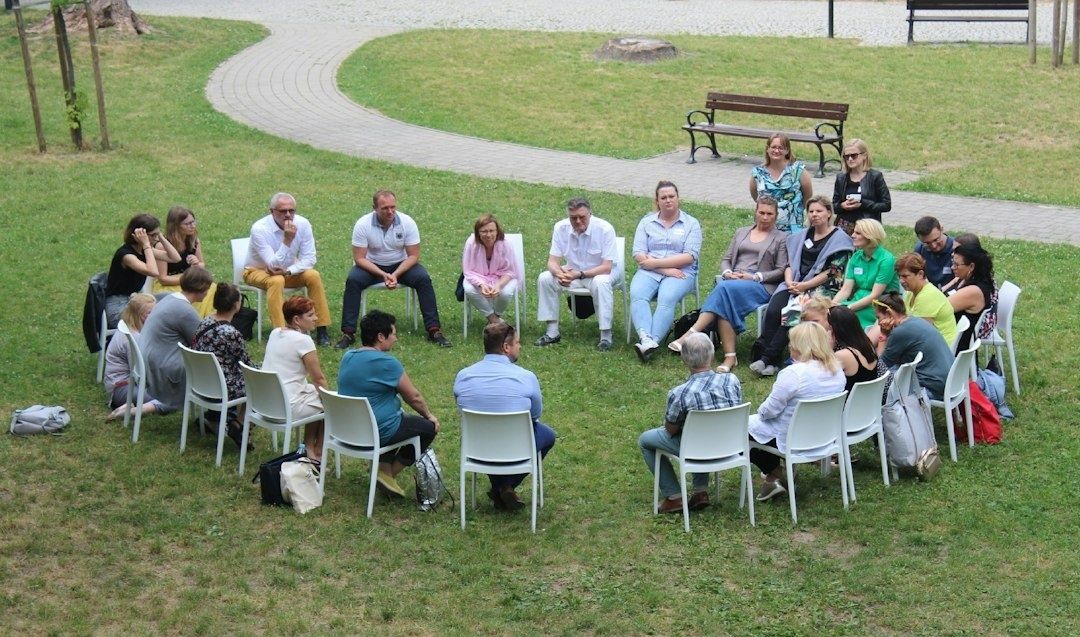
That reach explains its relevance in business. A mate circle, or ronda, temporarily softens formal rank. The chief executive, local manager, adviser, and visitor may all receive the same gourd, in the same sequence, under the same rules. This does not eliminate hierarchy, but it creates a shared social space in which conversation becomes less transactional. Accepting the ritual with respect can help a foreign professional signal cultural awareness; mishandling it can create unnecessary distance before negotiations have even begun.
The Economic Engine Behind the Gourd
The cultural importance of mate is supported by a substantial and resilient industrial base. According to the National Yerba Mate Institute”s 2025 figures, 324,769,423 kilograms of yerba mate left Argentine mills between January and December 2025. That represented a 7.3 percent increase over 2024. Exports reached a historic 57,980,911 kilograms, up 32.2 percent year over year, while domestic sales recovered by 3.1 percent to 266,788,512 kilograms.
The figures matter beyond agriculture. Yerba mate connects growers, harvesting contractors, drying facilities, mills, packaging companies, distributors, retailers, hospitality businesses, and workplaces across Argentina. The 2025 harvest delivered 889,253,083 kilograms of green leaf to drying facilities. Although that volume was 9.9 percent below the previous year, it remained above several earlier harvest levels, illustrating the sector”s scale and its ability to absorb fluctuations in production.
| Commercial indicator | 2025 volume or change |
|---|---|
| Yerba mate leaving mills | 324,769,423 kilograms, up 7.3 percent |
| Exports | 57,980,911 kilograms, up 32.2 percent |
| Domestic sales | 266,788,512 kilograms, up 3.1 percent |
| Green leaf entering drying facilities | 889,253,083 kilograms, down 9.9 percent from 2024 |
| Leading domestic package formats | Half-kilogram and one-kilogram packs, together 94.59 percent of mill output |
For executives, this is a useful reminder that mate is not a decorative cultural symbol detached from the economy. It is a mass-market commodity with strong domestic demand and expanding international reach. The same product that supports an informal conversation in a Buenos Aires office also represents a supply chain concentrated in Misiones and northeastern Corrientes. Understanding that dual identity helps explain why mate can function simultaneously as a personal ritual, a national marker, and a practical point of connection with local counterparts.
Anatomy of the Ritual from Calabash to Bombilla
The word ”mate” refers both to the infusion and to the vessel used to drink it. The traditional vessel is a dried, hollowed gourd, although wood, ceramic, silicone, and other materials are also common. The bombilla is a metal straw with a filtered end that sits within the yerba. Hot water is poured into the vessel, but it should not be boiling. Water in the approximate range of 70 to 80 degrees Celsius, or broadly 70 to 85 degrees depending on local preference, helps preserve the flavor and prevents the leaves from being scorched.
The plant itself, Ilex paraguariensis, is native to the Paranaense Forest. In the wild it can reach approximately 12 to 16 meters, but commercial trees are pruned to around two meters so workers can harvest them more efficiently. Argentine production is concentrated in Misiones and northeastern Corrientes. Preparation styles vary across South America, so an international visitor should avoid assuming that a Brazilian chimarrão or a finely ground Uruguayan yerba will behave exactly like a common Argentine blend.
- Fill the mate roughly three-quarters full with yerba. Cover the opening with a hand, gently shake the vessel, and return it to an angled position so the finer material does not immediately block the bombilla.
- Pour a small amount of cool or warm water into the lower side of the yerba. This helps moisten the leaves and creates a channel for the bombilla.
- Insert the bombilla into the damp area and leave it there. The filtered end should remain stable, rather than being pushed repeatedly through the yerba.
- Add hot, non-boiling water near the bombilla. The cebador refills the vessel after each participant drinks the serving completely.
- Drink the portion until the characteristic gurgling sound indicates that the water has been consumed, then return the mate directly to the cebador.
The most important terminology is practical. The yerba is the dried plant material; the mate is the vessel and, by extension, the beverage; the bombilla is the filtered straw; the cebador is the person who prepares and serves; and the ronda is the circle of participants. The government”s guide to El mate documents the plant, its history, its production geography, and its role in Argentine social life.
Unwritten Protocols of the Cebador and the Corporate Ronda
The cebador is not simply the person holding the kettle. This individual is the host, quality controller, and gatekeeper of the circle. The cebador decides how to prepare the yerba, controls the water temperature, pours each serving, and determines the order in which the mate travels. In a workplace setting, that responsibility may belong to the most experienced participant or simply to the person who began the round. The role requires attention because poor preparation can produce a bitter, weak, flooded, or clogged mate.
The etiquette is straightforward once its logic is understood. The vessel is shared, the serving is consumed fully, and the gourd returns to the cebador for refilling. Participants should not adjust the bombilla, stir the yerba, or move the straw to improve their own portion. Such actions can damage the structure of the infusion and are also viewed as breaches of hygiene. A participant should not hold the mate while speaking during a presentation or meeting because the entire circle waits for its return.
- Accept the mate with a calm ”thank you” only if you intend to leave the circle.
- Do not say ”gracias” merely as a formal expression of appreciation after every serving. In the mate circle, it generally signals that you are finished.
- Drink the serving completely and return the gourd to the cebador, rather than passing it directly to the next participant.
- Do not touch, rotate, or remove the bombilla.
- Do not demand sugar or criticize the bitterness. Sweetened mate exists, but the host”s preparation should be treated respectfully.
- If you do not want to participate, decline courteously before taking the gourd. Once accepted, avoid interrupting the sequence.
These rules are not simply ceremonial. They create predictability and fairness, which is why the ritual can bring people of different status into the same social rhythm. The serving order gives every participant an equal turn, while the cebador carries responsibility for the group. In a business environment, observing that structure demonstrates attentiveness to local norms more effectively than an overly rehearsed speech about cultural sensitivity.
Leveraging Mate Dynamics in Commercial Negotiations
Mate should not be treated as a negotiation tactic or a shortcut to commercial trust. Its value lies in the authenticity of the shared pause. A meeting that begins with a strictly transactional agenda may become more relational when a client offers mate, particularly if the conversation moves from immediate deliverables to family background, regional identity, professional history, or shared interests. The ritual creates repeated, low-pressure moments in which participants listen and respond without constantly returning to slides, contracts, or performance indicators.
That dynamic differs from a conventional coffee break. Coffee is often consumed individually and quickly, while mate is deliberately circulated. One person prepares it, each participant drinks a complete serving, and the group waits for the next refill. The process creates continuity. It can be especially useful after an introduction, before a site visit, or during an informal phase of a partnership discussion. If a client offers mate during a presentation, accept when practical, take the serving without delaying the meeting, and return it promptly. If health, dietary, or personal reasons prevent participation, a brief and polite explanation is sufficient.
- During a first introduction: observe before acting and allow the host to explain anything unusual.
- During a client pitch: avoid holding the gourd while presenting, because doing so stalls the ronda.
- During relationship building: use the pauses for genuine conversation rather than immediately steering back to price or contract terms.
- In post-pandemic workplaces: recognize that some teams use individual mates or avoid communal sharing. Follow the host”s current practice rather than assuming that traditional sharing is mandatory.
- In multinational teams: explain the rules to newcomers without turning the ritual into a test. Inclusion matters more than perfect technique.
Workplace practices have adapted since the pandemic, and not every office now shares a single vessel. Personal mate sets, disposable or individually served formats, and non-participation may be preferred for health or personal reasons. The commercial principle remains the same: respect the arrangement chosen by the group. Shared mate can build camaraderie, but insisting on it would undermine the very hospitality it is meant to express.
Mastering the Ronda to Build Enduring Business Partnerships
For international executives and diplomats, the mate circle offers a practical lesson in Argentine relationship management. Trust is often built through continuity, attention, and reciprocal participation rather than through one dramatic gesture. Mate embodies those qualities. The host invests time in preparation, every participant receives a turn, and the circle proceeds according to a shared code that is informal but precise.
The immediate rules are easy to retain: watch the cebador, accept or decline clearly, do not move the bombilla, drink the serving fully, return the gourd to the person who served it, and reserve ”gracias” for the moment you are leaving the ronda. Most importantly, treat the ritual as an invitation rather than a performance. Careful observation, modest participation, and respect for individual workplace adaptations will usually communicate more than confident but inaccurate displays of familiarity. In Argentine commercial life, mastering that balance can help turn a formal contact into a durable professional relationship.